Library and Research Center

TABLE OF CONTENTS
Since the Museum’s founding in 1966, the Library and Research Center (LRC) has supported the education and research programs of the Museum. The Library includes a manuscript library, the Irene Balzekas Map Memorial Collection, the Museum’s institutional archives, the music collection, the periodicals library, the rare book library, and a reference library.
Originally catalogued following the Dewey Decimal Classification System, in 2010 the Library catalogue would be digitized, and the library is now being re catalogued to research library cataloguing standards making it accessible to more researchers
globally.
While researchers may schedule a visit to view the Library’s collections, drop-in visits are unavailable at this time. Interested visitors may request an appointment via email at: info@balzekasmuseum.org
Library and Research Center Collections
Initially assembled and organized by Stanley Balzekas, Jr., the Library has grown to a collection of tens of thousands of physical volumes and an increasing number of digital objects.
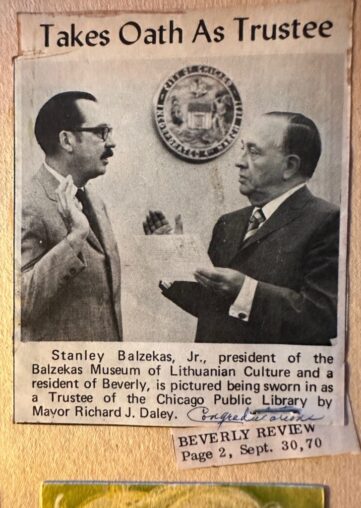
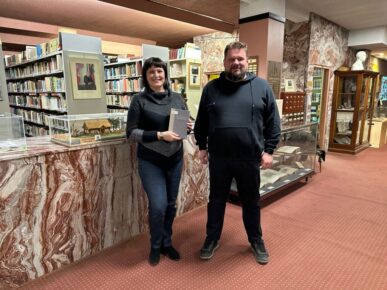
Museum Treasurer and past President, Joseph Katauskas, Jr., recalled that in the mid-eighties, when the current Museum building at 6500 S. Pulaski Rd, was being renovated, Stanley Balzekas, Jr. insisted the library be prominently located in the main exhibition hall, visible to Museum visitors. Balzekas had served as a trustee of the Chicago Public Library, and was involved with the development of the Chicago Cultural Center. He believed strongly that the Library and Research Center was the heart of the Museum, ensuring its purpose and future relevance as a cultural institution. He dedicated much of his life to the preservation and acquisition of books and other publications. The Museum maintains a full-time librarian to manage its ever-growing collection.
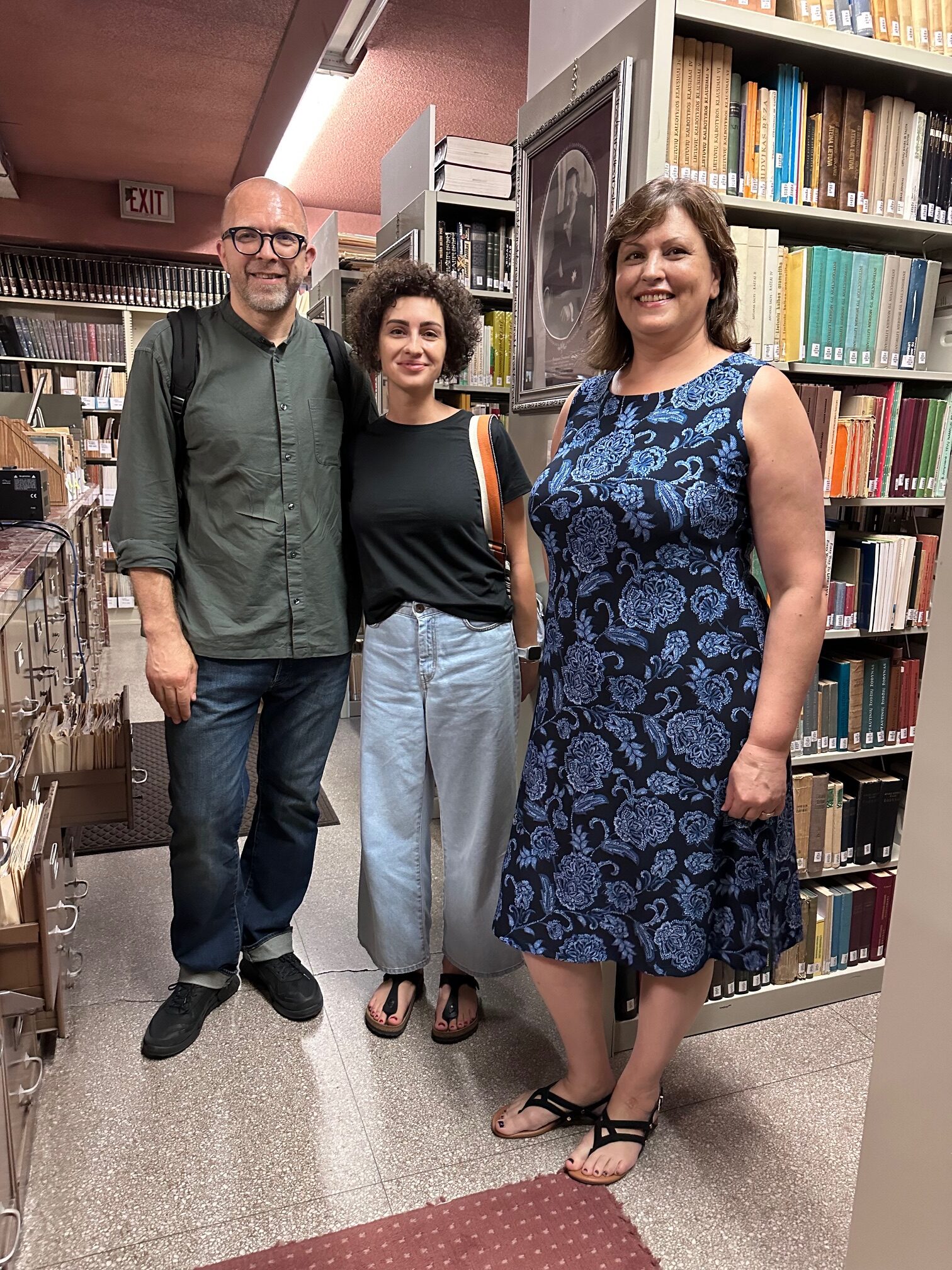
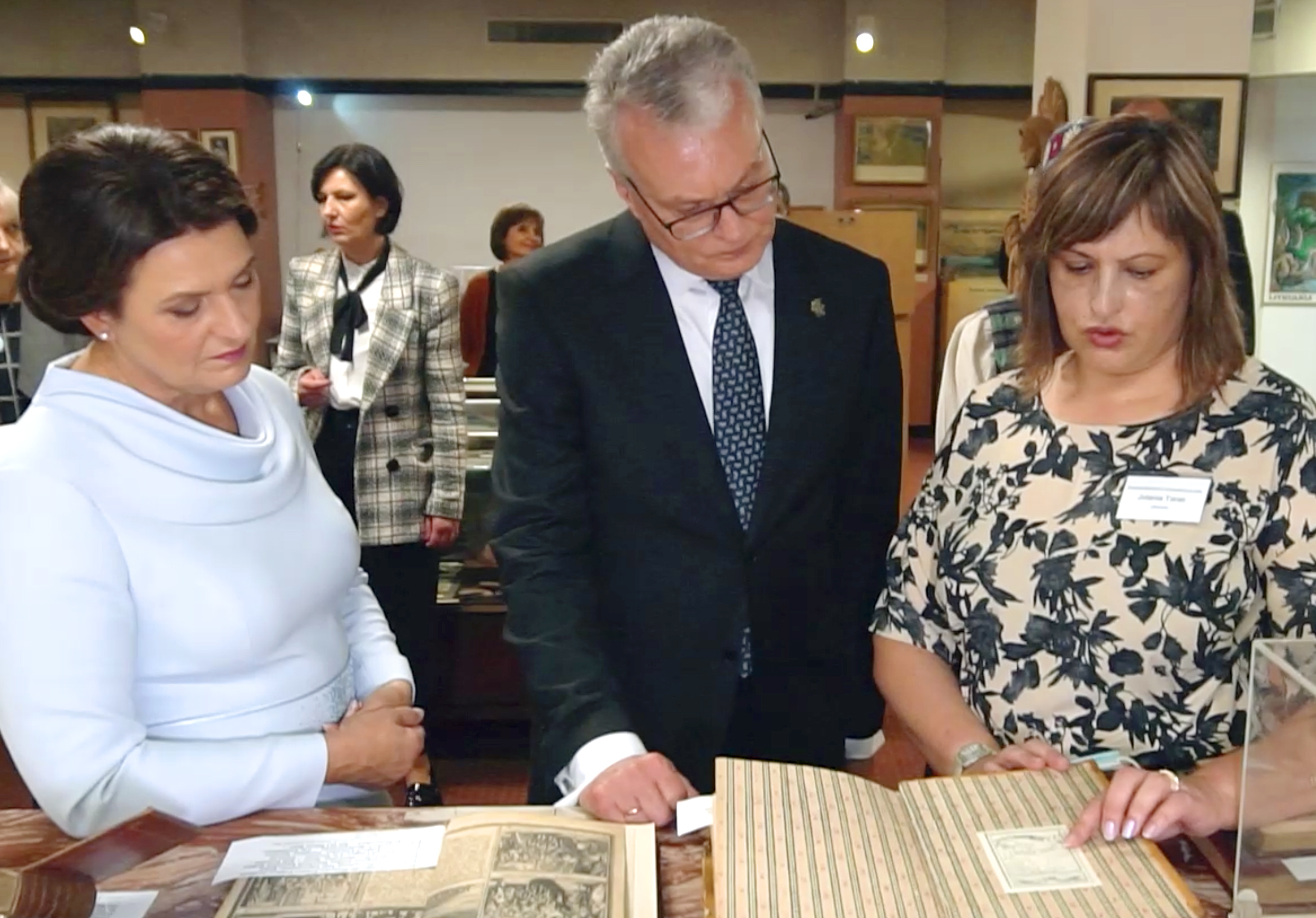
During its nearly 60-year history, the Library has been led by multiple librarians, including Jurgis Kasakaitis (1966-1985), David Fainhaus (1986-1995), Danutė Viktorienė (1996-c.2002), Irena Pumputiene (c.2003-c.2013), Amy Sherwood (2018-2020), and current librarian, Jolanta Taras, a specialist in Lithuanian emigré literature from the Martynas Mažvydas Lithuanian National Library in Vilnius.
The library has been funded in part through Library Memorial Donations, generous contributions, and the support of many dedicated staff, donors, and volunteers.
Manuscript Library
The Manuscript Library includes holdings from many prominent individuals and organizations. Some collection strengths include Lithuanian immigration to the United States, World War II displaced persons’ camps in Europe, and Lithuanian organizations (churches, cultural associations, fraternal societies, political organizations, and the performing arts).
Some manuscript collections include:
- Adomas Adomaitis Papers
- Augustinas Idzelis Papers
- Aleksandras Ružancovas Papers
- Baltic University Records
- Chicago Lithuanian Women’s Club Records
- Dainava Records, 1977-1991
- Darius and Girėnas Research Collection
- Domas Adomaitis Papers
- Emillia Abraityte and Wanda Abraityte Papers
- Leonardas Simutis Papers, 1917-1967
- Lithuanian American Council, Inc. Records
- Lithuanian Chamber of Commerce of Illinois Records
- Lithuanian Diplomatic Service Records, 1919-1941
- Petras Mikolainis Papers
- Rev. Juozas Prunskis Papers
- Stanley R. Balzekas, Jr. Collection
- Vaclovas Kasakaitis Papers
- Vyriausiasis Lietuvos Išlaisvinimo Komitetas Records
- Women’s Guild of the Balzekas Museum Records
Irene Balzekas Memorial Map Collection
Since at least 1967, historical maps have been donated to the Library. This collection of antiquarian and modern maps documents the cartographical record of Lithuania’s history as much as it is a rich visual resource of Lithuanian communities and identities.
For the next fifty years, the collection would continue to develop. By 1972, with the support of the Women’s Guild, the maps had been rehoused and renamed as the Map Collection. Following multiple acquisitions and generous donations, the Map Collection would be formally named the Irene Balzekas Memorial Map Collection in tribute to the co-founder of the Museum. By this time, the collection included over 400 rare and modern maps from the 16th through 20th centuries. In 1981, the Collection would be re-cataloged. In 1986, compiled by curator Patricia Bakunas, the Irene Balzekas Memorial Map Collection: Catalogue of Holdings would be published. By 1987, there were over 500 maps. In 1995, there were over 750 maps.
Some maps include:
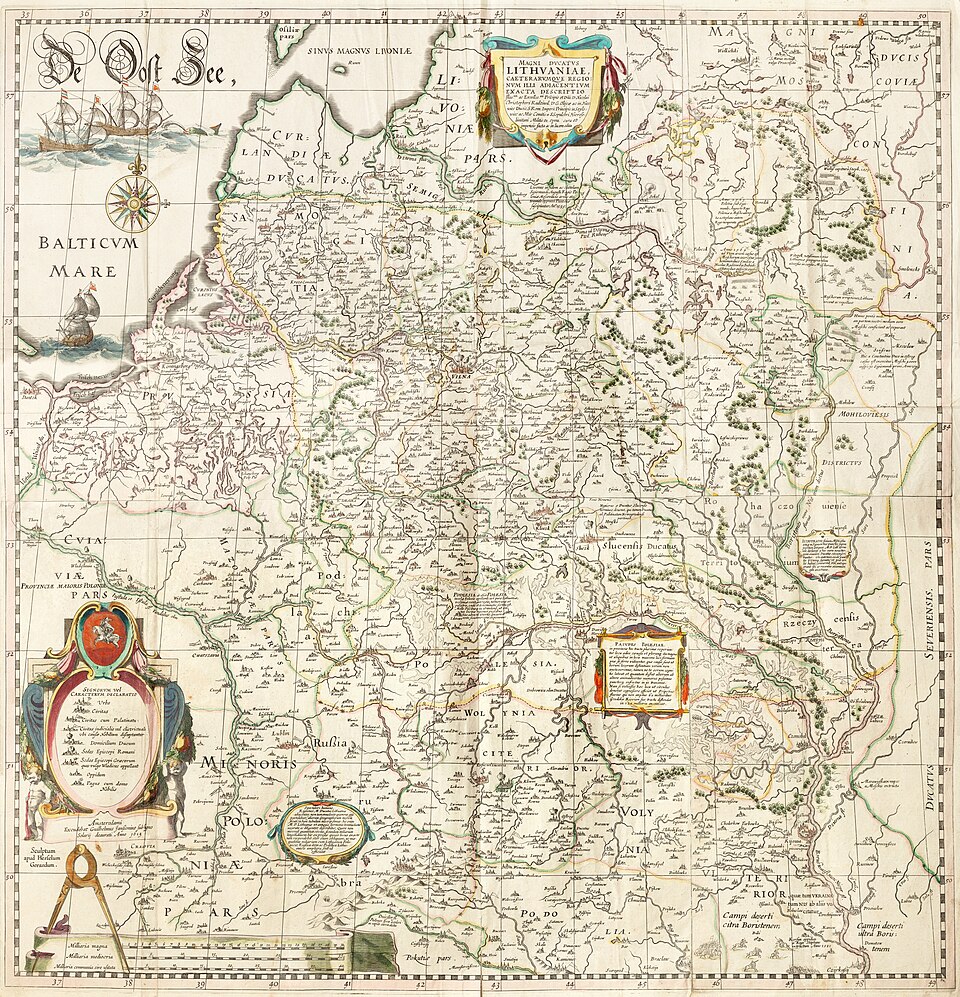
- Magni Ducatus Lithuaniae, by Willem Janszoon Blaeu, c.1613
- Radvilas, by Giovanni Antonio Bartolomeo Rizzi Zannoni, c.1613
- Grandy Duchy of Lithuania, by Gerard Mercator, 1619
- Series on Lithuania, by Nicolas Sanson d’Abbeville, c.1665
Museum Archives
The institutional archives of the Balzekas Museum of Lithuanian Culture are currently being processed and are unavailable for research at this time.
Music Collection
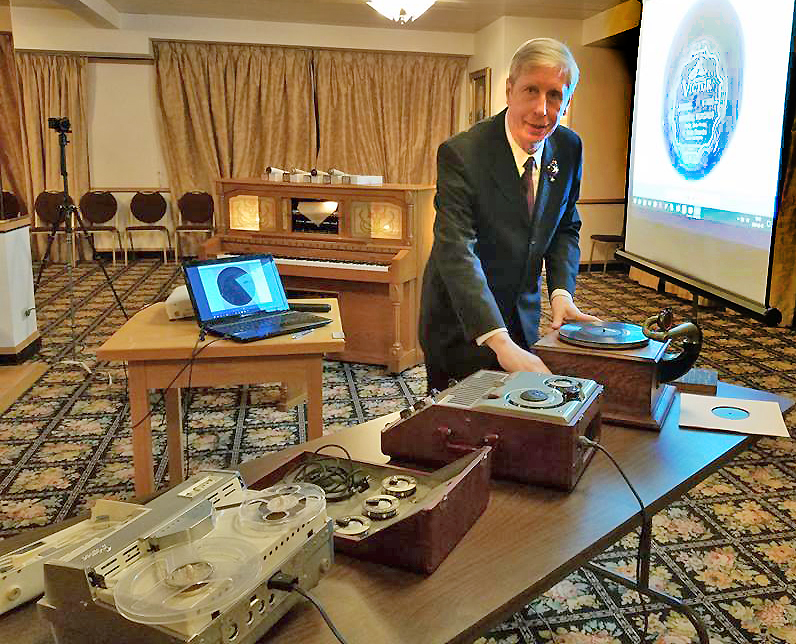
In 1990, the Museum Review announced the first call for a music archives volunteer. In 1991, Juozas Sodaitis founded the Music Archives with a collection of music sheets and piano rolls. Music recording donations would continue and funds would be raised to modernize its storage. By 2018, the Women’s Guild raised funds to digitized both the music recordings and the periodical library. That same year, supported by a Baltic-American Freedom Foundation research fellowship, in addition to his own research, Professor Darius Kučinskas, PhD, would help catalogue the collection even further.
Dr. Kučinskas discovered that the Balzekas Museum has the largest collection of Lithuanian piano rolls in the world, which he catalogued and subsequently recorded on the Museum’s pianola player piano. He has subsequently produced two CD recordings of piano roll music.
In 2020, the Museum received grants from the Lithuanian Foundation and the City of Chicago Department of Culture and Special Events through CityArts to digitize videographer Alexander Plenys’s Collection of video recordings of annual Chicago Lithuanian Opera performances from the 1980s and 1990s. These digital recordings were shared with the Martynas Mažvydas Lithuanian National Library and uploaded to the Museum’s own online Vimeo chanel. Concerned about the demagnatization of VHS tapes and cassette recordings, the Museum prioritized the contiued digitization of other concert recordings in the Aleksandras Plenys and Edward Mankus Collections, as well as other sound recordings donated to the Museum.
Finding aids will be available online at a future date.
Periodicals Library
By 1975, there were over 700 publications in the periodicals collection. By 1980, there were over 800 items. By 1985, there were 1500 items. By 1991, there were 1800 items. In 2018, the Women’s Guild raised funds to digitized both the music recordings and the periodical library.
Some early Periodicals Library curators have included long-time Museum volunteer Edward Pocius.
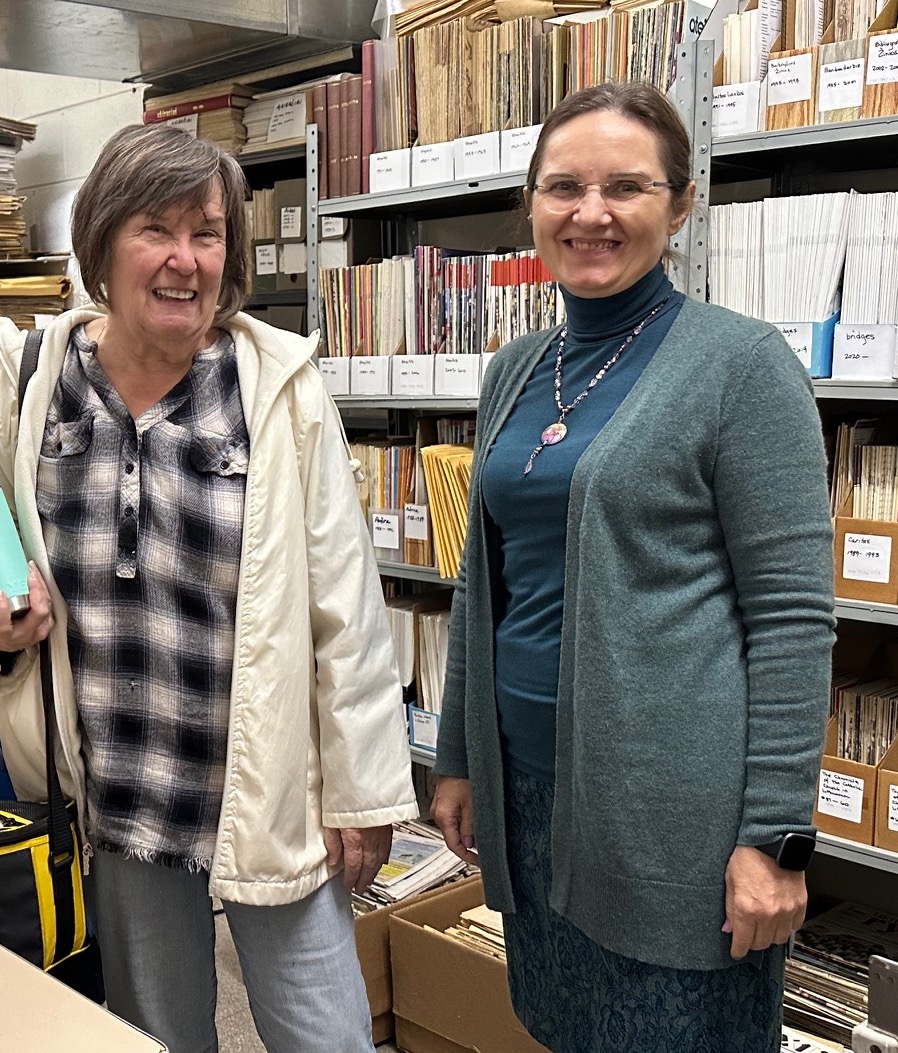
Periodicals in the Museum’s collections were sought out by Dr. Jonas Daugirdas who together with the Lithuanian Research Center in Lemont, had undertaken to digitize Lithuanian newspapers and magazines published in outside of Lithuania since the latter half of the 19th Century. Thanks to these efforts, the majority of known periodicals are now accessible and searchable through https://www.spauda.org.
The Periodicals Library is being catalogued and will be available online at a future date.
Photograph Collection
Now documenting over 150 years of history, the Museum’s photograph collection was
an early Museum initiative that started in 1976. Many photographs and negatives have
featured historical sites or locations in both Lithuania, the United States, and even
around the world. Genealogists, historians, writers, and other researchers have found
this useful for its breadth of subjects including early photographs of Lithuanian towns
and villages.
Within just two years, in 1978, the collection would be renamed the Photo Archive to
reflect its original purpose as a central research repository of Lithuanian images. By
1981, the collection had passed 15,000 items. By 1985, there were 30,000 images. By
1993, the collection surpassed 50,000 items and now included postcards too. Today’s
Photo Archives continues to accept donations.
Some early Photograph Collection curators have included Konstantinas Petrauskas
(c.1968-c.1978) and Irena Šerelis.
The Photo Archives are being processed and are unavailable for research at this time.
Rare Book Library
This collection of books from the early Modern period through the present, include publications in Czech, English, French, German, Latin, Lithuanian, Polish and Russian. Some collection strengths include publications documenting the uprisings of 1831 and
1863, Tsarist Russian language policy in Lithuania, and the Lithuanian nationalist movement.
In 1973, as one of the first rare book library champions, Leon Kibort (1899-1983) would generously donate 174 titles to significantly expand the collection. The Kibort Collection would form the core of the Rare Book Library’s holdings for many years. By 1980, there were 370 volumes (174 were from the Leon Kibort donation). By 1995, there were 700 volumes. By 1996, there were 1000 volumes.
More titles continue to arrive and the Library is seeking help founding an endowed library preservation and conservation budget.
Reference Library
As the core of the Library’s collections, the main library features the largest collection of
books about Lithuania or Lithuanians from around the world.
For most of its history, the Reference Library has grown by an average of 10,000
volumes per decade. By 1980, there were over 10,000 volumes. By 1991, there were
30,000 volumes. By 1993, there were 40,000 volumes. By 2008, there were 50,000
volumes.
More titles continue to arrive and the Library is seeking help founding an endowed library acquisition budget.
*** Library Policies ***
Reading Room Guidelines
Reading privileges to use Library materials are granted to registered visitors. Please
contact the Library, for the most recent reading room guidelines. Please email:
info@balzekasmuseum.org Please title your email “Reading Room Guidelines
Request”.
Library Registration and Circulation
All Library users must submit a Library Use Form. Library use registration must be
approved by the Librarian, before the user may access the Library’s collections.
For a current Library Use Form and to schedule a Library appointment, please email:
info@balzekasmuseum.org. Please title your email “Library Visit Request”.
Donation and Gift Policy
Donations are welcomed; however, the Museum and Library request a list of titles and a
scheduled appointment to deliver the books or other items of interest.
To schedule a donation assessment and delivery, please email:
info@balzekasmuseum.org. Please title your email “Library Donation Request”.
If you are interested in accessing any of these collections, please reach out to info@balzekasmuseum.org and state who you are, what organization you are a part of, and why you are interested in accessing these collections.